
Checking Criminal History in Lower Paxton
There is no single Lower Paxton criminal-record screen. The township records page handles local police and public-record requests. UJS supplies public court dockets. Dauphin County Prison covers present county custody, and PATCH supplies the separate statewide PSP result.
Use a channel-complete check when the record type is uncertain:
- Contact Lower Paxton Police Records for the township incident or arrest narrative.
- Submit a written, specific request when formal Right-to-Know remedies may matter.
- Search the appropriate Dauphin Magisterial District Court docket for local proceedings.
- Move to Common Pleas and the county prison when charges or custody leave township hands.
- Use PATCH only when a Pennsylvania statewide repository result is needed.
Compare dates, docket numbers, agencies, and dispositions. A local check, a police report, and a PATCH certificate are separate products.
Lower Paxton Records at Prince Street
The Municipal Center and Police Department share 425 Prince Street, Harrisburg, PA 17109. Police Records is on the lower level. The published records telephone is 717-657-5656, and records hours are 8:00 a.m. to 4:00 p.m. General township business uses 717-657-5600.
The official Lower Paxton site shows the municipal setting and routes visitors to township services.
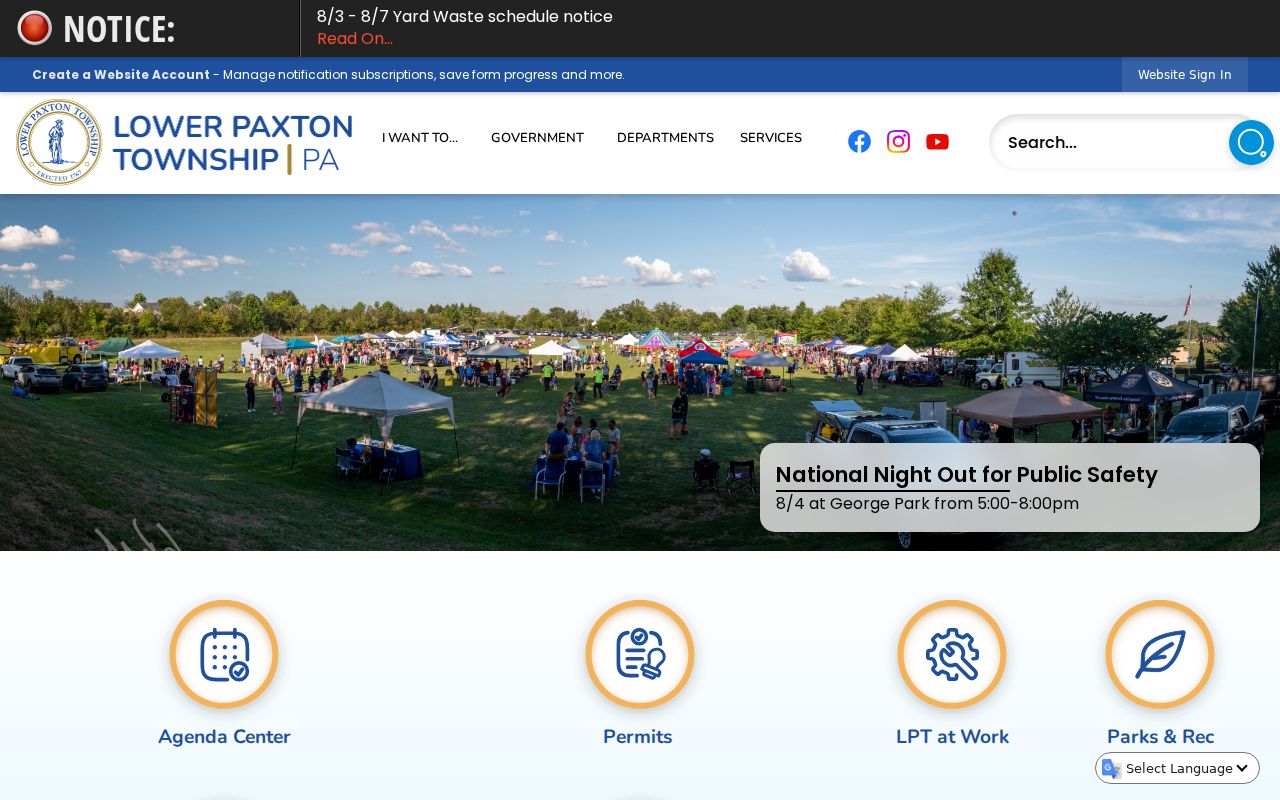
The shared building does not merge every file. Police narratives stay with Police Records, township administrative material follows the open-records route, and court dockets remain with the judiciary.
Lower Paxton Police Records
425 Prince Street, Lower Level
Harrisburg, PA 17109
717-657-5656
8:00 a.m.-4:00 p.m.
Lower Paxton Police Department Records
The 2026 policy directs police-record requests to Capt. Tim Hicks, with Sgt. Steve Cover listed as alternate. A good request states the event or document, a useful date range, and enough detail for staff to locate it. The office need not create or rearrange a record that does not exist.
Police incident material may be redacted or withheld when investigative, victim, juvenile, or personal information is protected. Ask for the precise record rather than an undefined criminal history. Court dispositions are better found through UJS or the court office, and current custody belongs with Dauphin County Prison.
Note: Written requests preserve statutory review rights more clearly than a verbal request under the township’s published policy.
Written or Verbal Lower Paxton Requests
Lower Paxton may accept a verbal request, but the township says a written form is required to preserve Right-to-Know Law remedies. That distinction can matter if access is denied, delayed, or narrowed. Written requests also leave a stable record of the exact description and delivery choice.
| Requester Details | Standard name, address, and contact information |
|---|---|
| Record Description | A specific document, subject, event, and useful time period |
| Delivery | Inspection or copies in an existing medium |
| Police Routing | Capt. Tim Hicks, with Sgt. Steve Cover as alternate |
| Response | Within five business days or a lawful extension notice |
General inspection hours are weekdays from 9:00 a.m. to 4:00 p.m. Police Records publishes its own 8:00 a.m. to 4:00 p.m. hours, so confirm which counter holds the item before visiting.
Lower Paxton Arrests and Bookings
Lower Paxton Police creates the arrest report. The township does not advertise a separate long-term jail, so post-booking custody moves to Dauphin County Prison. The police file may describe the alleged event, while the prison record documents admission, bond, location, and release status.
For a recent Lower Paxton arrest, check the creating police agency, county custody source, and UJS docket. The county research found no verified full public booking blotter. A missing prison result can mean release or transfer, not that the event never occurred. The countywide Dauphin arrest lookup covers the full custody chain.
An arrest is not proof of guilt. Read the final disposition on each court count because filed charges may differ from the first police allegations.
Lower Paxton Local Check or PATCH?
Lower Paxton lists a $10 local criminal-history check. PATCH is a $22 statewide Pennsylvania repository check. The price gap reflects different scope, not two brands of the same result. A township product should never be described as a substitute for PSP’s statewide certificate.
| Product | Scope | Published fee |
|---|---|---|
| Lower Paxton local check | Township product through local police | $10 |
| PATCH standard check | PSP Pennsylvania repository data | $22 |
| PSP Access and Review | One’s own convictions and non-convictions | $20 by mail |
Choose by scope. For review or correction of one’s own full Pennsylvania record, PSP Access and Review is the stronger official route. For a Lower Paxton police event, ask the township for the underlying report.
Municipal Court Records in Lower Paxton
Lower Paxton does not maintain a separate municipal criminal court. Traffic, summary, and preliminary criminal matters use the appropriate Dauphin County Magisterial District Judge. Charges held for court move to the Dauphin Court of Common Pleas and its Clerk of Courts.
| Court Name | Assigned Dauphin Magisterial District Court, then Court of Common Pleas as applicable |
|---|---|
| Case Types Heard | Traffic and summary cases, preliminary stages, and held-for-court criminal cases |
| Case Lookup | UJS Web Portal, MDJ office, or Dauphin Clerk |
| Docket Contents | Case number, court, charges, filing events, bail, dispositions, and sentences |
| Copies | Available from the responsible judicial office under its current fee schedule |
Select Dauphin County and the correct court level. A name hit needs verification because same-name records can appear.
Lower Paxton Police Record Fees
The township publishes unusually specific police fees. They help a requester budget, but each fee applies to a particular service. Confirm the current schedule before filing because the policy may change.
| Lower Paxton item | Published amount |
|---|---|
| Standard single-sided copy | $0.25 |
| Certification per record | $1 |
| Accident report | $15 |
| Police recording duplication | $100 |
| Photo or video | $25, depending on quantity |
| Processing / redaction | $30 / $25 |
| Resident / nonresident fingerprints | $20 / $40 |
Postage and specialized media are charged at actual cost, and prepayment may be required when estimates exceed $100. Local fingerprint service also differs from an authorized IdentoGO FBI submission.
Where Lower Paxton Records Go
A fingerprintable Lower Paxton arrest creates a township police file, a county booking when custody occurs, and a judicial docket. If charges are held for court, the Dauphin Clerk keeps the Common Pleas case. Reported dispositions later feed PSP’s Central Repository.
Record flow: Lower Paxton Police › Dauphin County Courts › Pennsylvania State Police Central Repository
The layers update at different speeds. Recent facts usually begin with local police or custody. The docket becomes the best source for filed charges and outcome. PATCH is the statewide repository layer, not a township incident-report archive.
Five Days in Lower Paxton
The township generally responds to a written RTKL request within five business days. It may grant, partly grant, deny, or invoke a statutory extension. A response is not the same as immediate production in every case, and protected parts may be redacted.
If no timely response arrives, consult the policy for deemed-denial and appeal rules. Ordinary record appeals generally go to the Pennsylvania Office of Open Records. Criminal investigative denials go to the Dauphin County District Attorney. Appeals are generally due within 15 business days of denial or deemed denial.
Practical point: Keep the submitted form, delivery proof, response, fee estimate, and any extension notice together.
Lower Paxton Retention Is Not Access
Township retention material shows that different police records may have different schedules. The cited schedule gave motor-vehicle accident records five years and citations three years, with separate periods for daily vehicle and hearing records. Those schedules can change.
Retention answers how long an office keeps an item. Disclosure answers whether the public may receive it. A file can still exist yet contain protected investigative or personal material, and an older item may already have been lawfully destroyed. Ask the records office about both issues without assuming one decides the other.
A narrow date and record category helps Lower Paxton staff apply the right schedule. If the office says an item no longer exists, a court docket may still preserve the judicial history, but it will not recreate the lost police narrative.
Public Access Rules in Lower Paxton
Pennsylvania’s Right-to-Know Law governs many township executive records. Judicial dockets follow court access rules. Criminal investigative records, protected victim details, juvenile material, personal identifiers, and sealed files may be withheld or redacted. Police audio and video use Act 22 procedures.
Key Statutes:
Pennsylvania Right-to-Know Law sets the general township request and response framework.
Pennsylvania Criminal History Record Information Act governs criminal-history access, dissemination, and expungement.
Judicial public-access policies govern court files outside ordinary township RTKL processing.
A partial grant can be useful even when parts are withheld. Review the released pages, the redaction markings, and the explanation together. If the real goal is a disposition, switch to the court docket instead of appealing a township office for a record it never held. If the goal is the police account, keep the request with Lower Paxton and use the stated appeal channel when warranted. This record-by-record approach respects each custodian’s role and produces a clearer Lower Paxton criminal history.
The township records page is also the source for current forms and fees.
The official request page shows the specific Lower Paxton police-record path.
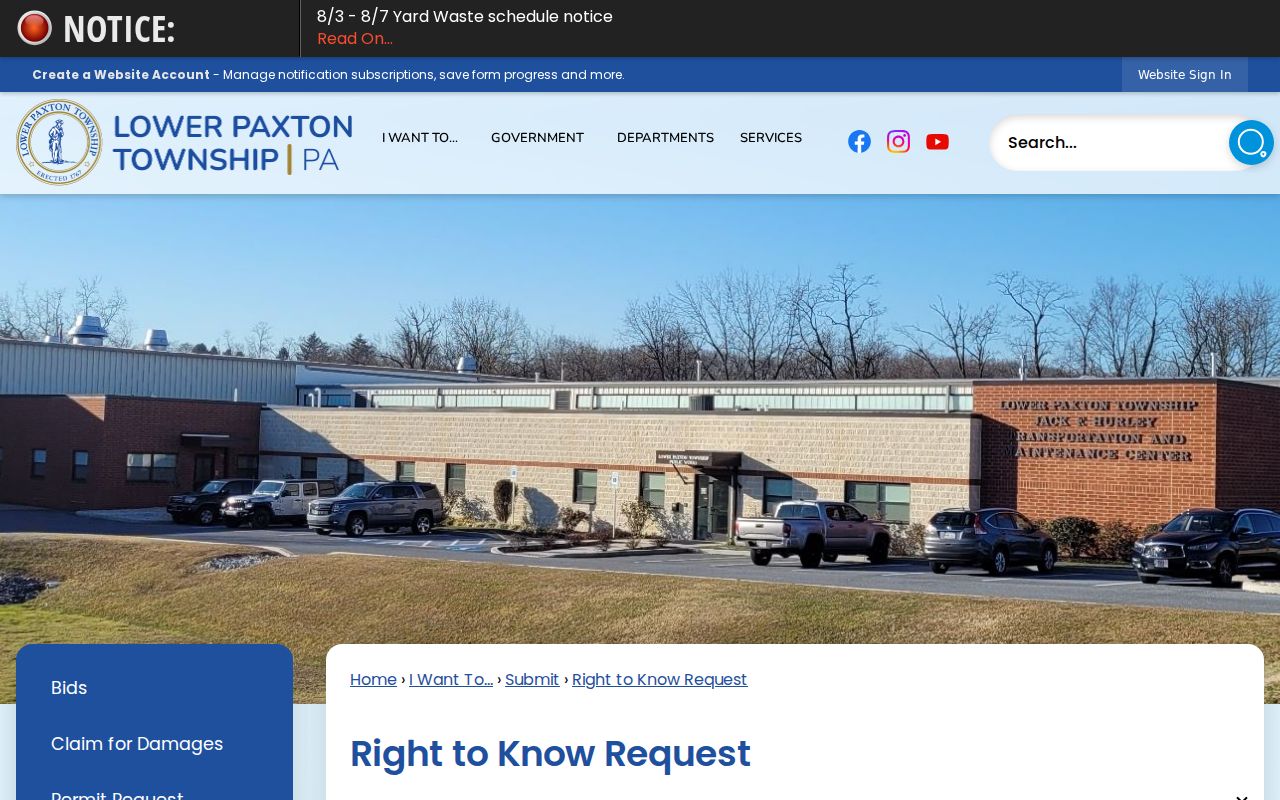
Use that local route for police material, while routing dockets and statewide repository results to their own custodians. Save all tracking details and receipts. They help staff locate the request if production follows later, and they give an appeal officer a clean timeline if a dispute arises.