
Sex Offender Checks in Dauphin County
The Pennsylvania State Police maintains Pennsylvania's Megan's Law Public Website under 42 Pa.C.S. Chapter 97. It is the official public source for a Dauphin County registry search. No verified Dauphin County app-only registry or public registration-counter address was located, so readers should not assume that the Sheriff's office operates a second public list.
Use a name route to examine one person or geographic filters for neighborhood awareness. Gather spelling variants, a municipality or ZIP, and an address if proximity is relevant. PSP warns that information supplied by registrants and other entities may be outdated or inaccurate. Fingerprint comparison is the only positive identification method.
Dauphin Name and Address Searches
Name and location routes answer different questions. A name search is narrow, but aliases and spelling can hide a result. A county or municipality filter surveys a place without proving that every address is current. An address and radius route focuses on one point, yet only the live form can confirm its current radius choices. Do not invent a radius or infer exact risk from distance alone.
Choose Dauphin County to avoid a same-named place. Switch between map and list views as needed. If no match appears, try a sound spelling or alias variation, then use the national search for cross-state coverage. A no-result screen is not a safety guarantee.
How to Search Pennsylvania's Megan's Law Website
The PSP registry opens behind an acknowledgment. Read the use and accuracy notice before entering. It provides person and geographic routes that can narrow results to Dauphin County. The registry is not a live warrant list, a full criminal docket, or a list of every person ever convicted of a sexual offense.
- Open the PSP Megan's Law site, read its notice, and accept the gateway.
- Search by exact name or choose Dauphin County, municipality, ZIP, or the available address-proximity route.
- Compare the photo and several public identifiers. Never identify solely from a name.
- Read the offense jurisdiction, registration category, status, and public location fields in context.
- Use NSOPW when the question crosses state lines and report inaccurate data to PSP.
| Field Label | Type | Required | Notes |
|---|---|---|---|
| First Name | Text | Optional or conditional | Name route |
| Last Name | Text | Conditional | Try supported variants |
| County | Dropdown | Optional | Select Dauphin |
| Municipality or ZIP | Text or dropdown | Optional | Narrows a place search |
| Street Address and Radius | Text and dropdown | Conditional | Use live radius choices |
| Map or List | Control | No | Changes presentation |
Identify Dauphin Results With Care
A matching name is a lead, not positive identification. Compare the photo, aliases, age or date data, physical description, offense jurisdiction, and other public details. PSP says fingerprints are the only positive means of identification. This caution is vital when a common name appears or when a displayed location may have changed.
The official registry screen places its use and accuracy warning before public access.
View the source for Pennsylvania's Megan's Law registry.
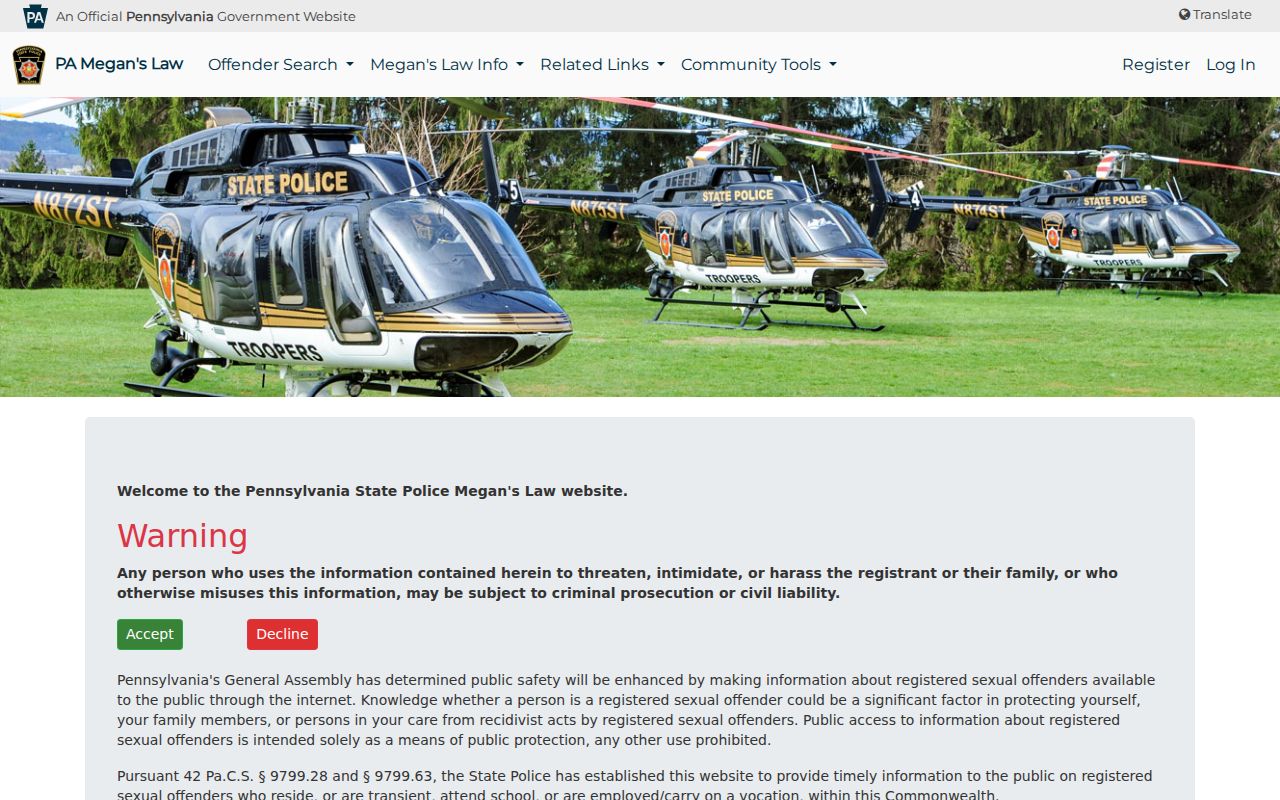
That gateway reminds each reader to compare more than a name before drawing a conclusion.
Inside a Dauphin Registry Profile
A qualifying profile can show the items below, but exact fields vary by legal category and supplied data. It describes a registration duty. It does not reproduce every court event, show a live warrant, or predict future conduct. An absent field is not proof that the circumstance does not exist.
| Name and aliases | Published names associated with the registration |
|---|---|
| Photo and description | Photo when supplied, sex, race, age data, build, and identifying marks |
| Public locations | Residence or transient location and work or school data where statute publishes it |
| Offense | Jurisdiction, statute or description, and conviction or adjudication date |
| Category or tier | Registration classification and duration framework |
| Status and other fields | Compliance information, vehicles, and other details when applicable |
The profile should be read as a whole. A single address or photo can be stale, and a tier label does not replace the statute or the underlying court record.
Residence information is published only as the governing category permits. Work, vocation, school, vehicle, and identifying-mark fields can also vary. The listed offense date or jurisdiction explains the registration basis, but it should not be read as a current charge. To understand the court outcome behind a Pennsylvania entry, search the UJS docket separately. A registry profile and a criminal case file serve different public purposes and update through different agencies.
Fix an Outdated Dauphin Listing
Report suspected outdated or wrong registry information to the PSP Megan's Law Section at 1-866-771-3170. Identify the field at issue without spreading the profile elsewhere. For suspected noncompliance, call PSP or the proper police agency. Emergencies and suspected crimes go to 911. A public user should not confront a registrant or attempt to enforce registration law.
PSP's registry information and locator guidance reinforces that public systems have different scopes.
View the source for PSP registry information.
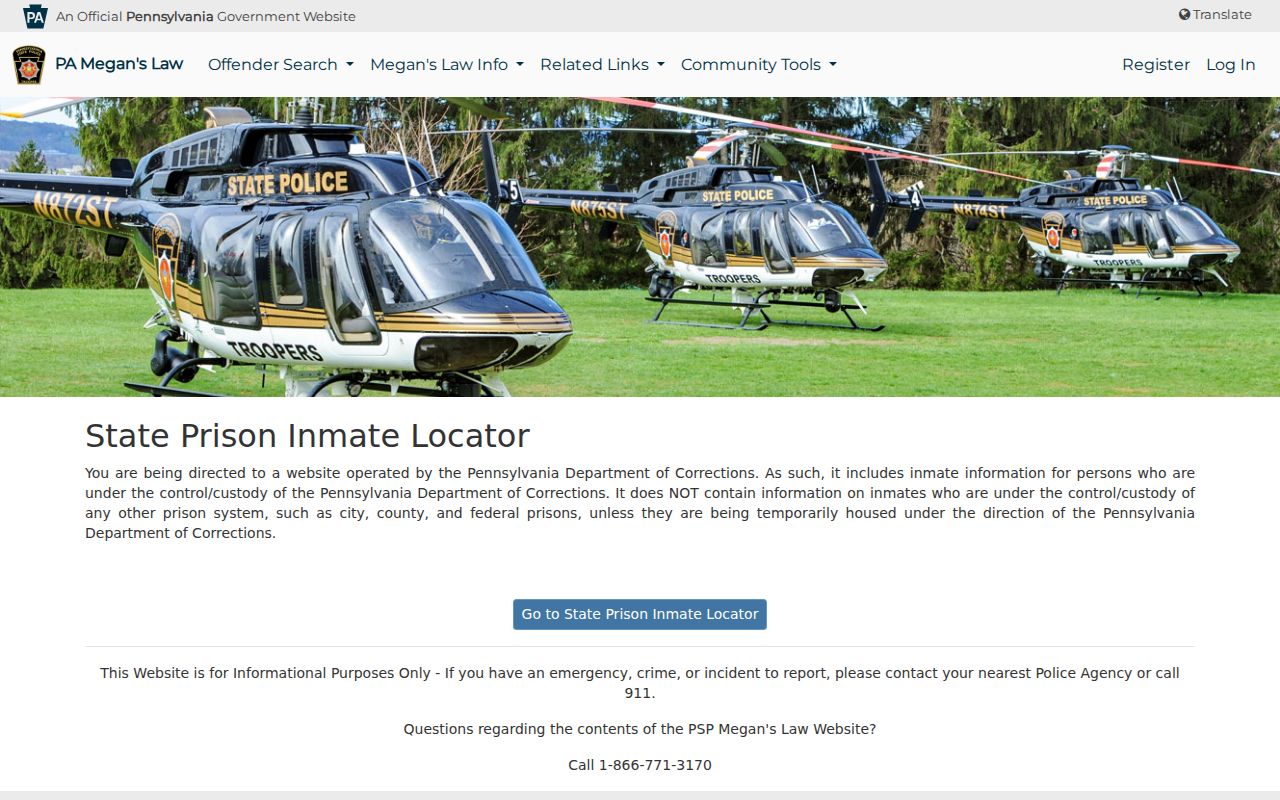
The correct response to stale data is an official report, not an assumption that the shown address is current.
Pennsylvania Registration Levels and Requirements
Pennsylvania uses Tier I, II, and III periods plus a Sexually Violent Predator category. Chapter 97 contains separate subchapters and litigation-driven rules for different dates and groups, so this table is a general frame, not a case-specific ruling. Out-of-state equivalency, juvenile rules, tolling, and later relief can affect a term.
| Level or Tier | General Duration | Verification |
|---|---|---|
| Tier I | Generally 15 years | Annual in person |
| Tier II | Generally 25 years | Semiannual |
| Tier III | Generally lifetime | Quarterly |
| Sexually Violent Predator | Lifetime with enhanced duties | As Pennsylvania law directs |
The official law source contains the governing registration and publication rules.
View the source for Pennsylvania Chapter 97.
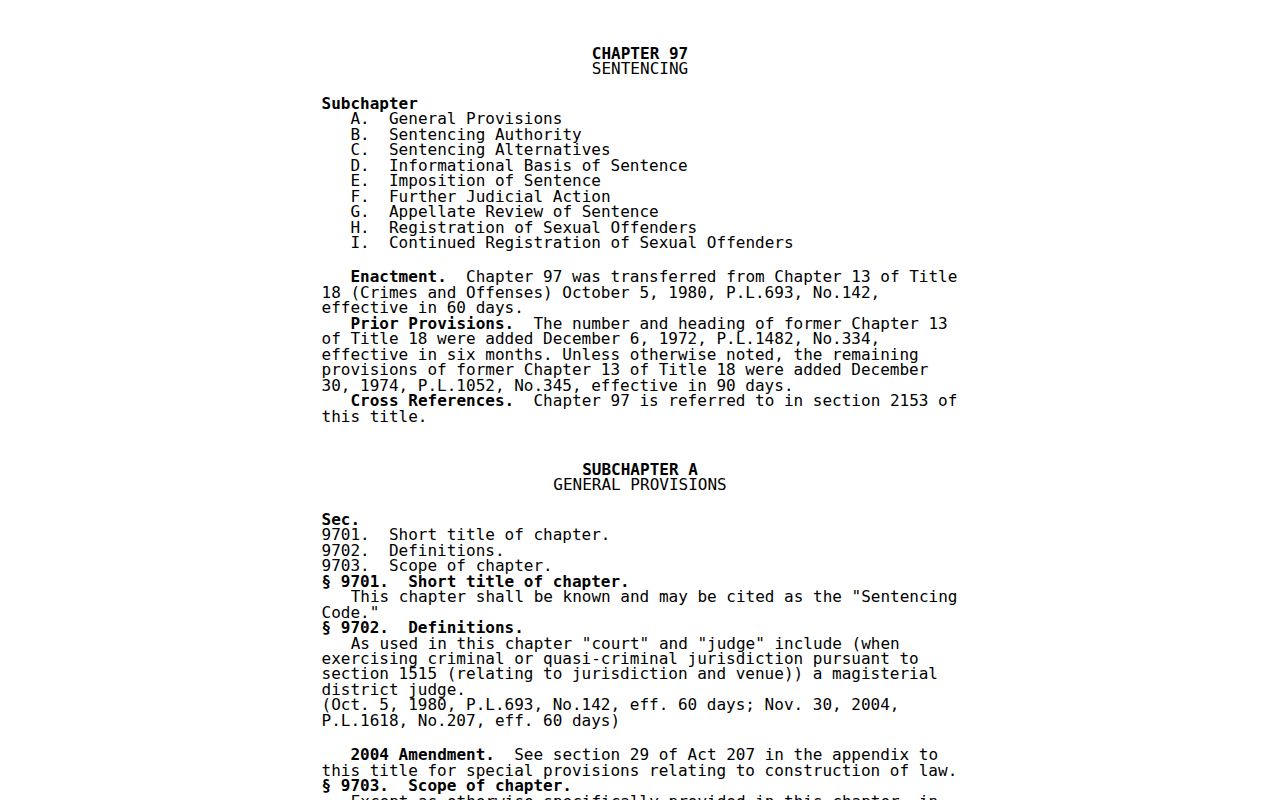
Use the profile's own designation and current law instead of assigning a tier by guesswork.
Dauphin Registry and NSOPW
The PSP registry is the originating Pennsylvania source. The National Sex Offender Public Website searches participating jurisdictions across the country. Use NSOPW when someone may have moved across state lines, then return to the listed jurisdiction's own registry for its current profile and warning. The national layer broadens the reach; it does not make Pennsylvania data newer than PSP's source record.
The national portal image shows this cross-state search layer.
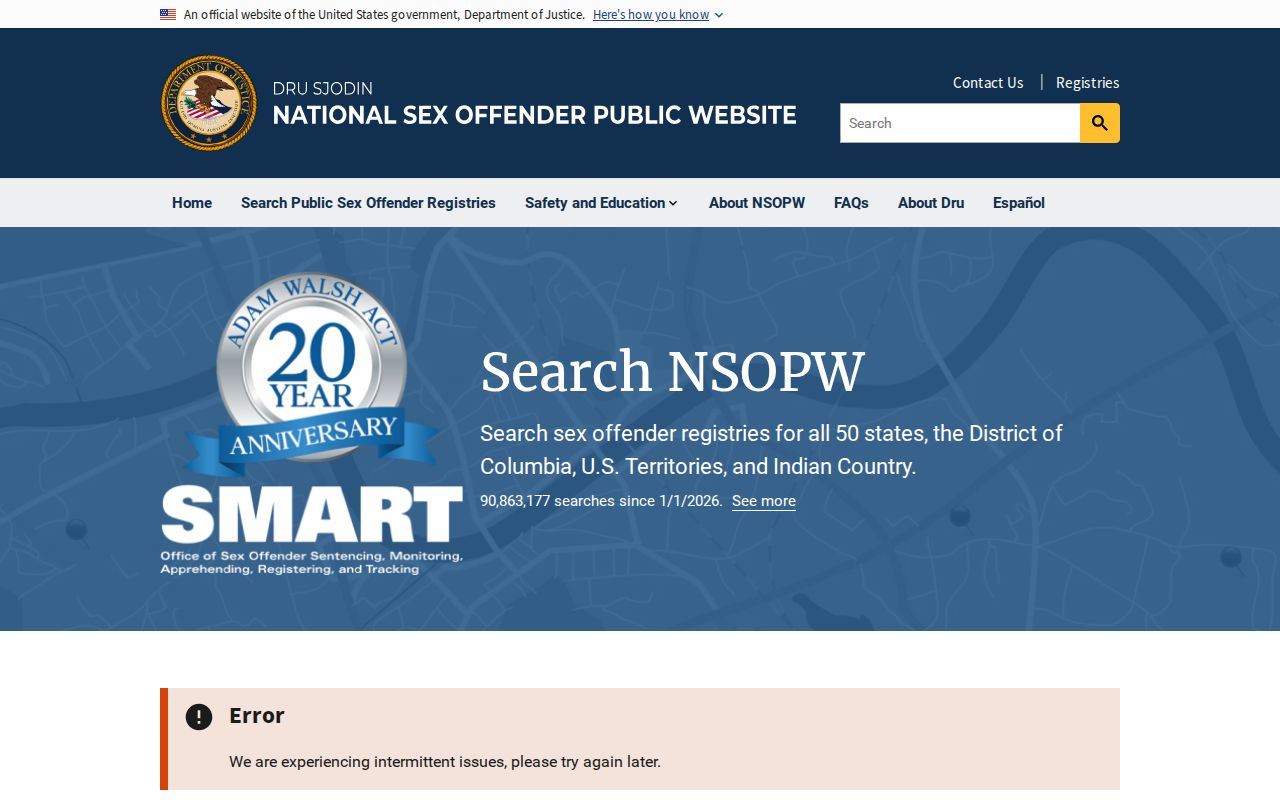
Using both portals helps when a Dauphin County name search returns no result but another jurisdiction may hold the registration.
Start with the jurisdiction most likely to hold the current duty. If NSOPW returns a Pennsylvania record, open the PSP source profile and follow its reporting channel. If it points elsewhere, use that jurisdiction's official site. Do not combine old profiles from several places into a claim that a person lives at all of them. A move, duplicate name, or delayed update can explain what first appears to be a conflict.
Community Notification and Lawful Use
The registry exists for public protection and community awareness. Use it for sound safety steps, comparison of official facts, and reports through the right channel. Do not republish a profile, organize contact, infer danger from proximity alone, or treat the registry as a real-time guarantee of location.
Registry misuse warning: Under 42 Pa.C.S. Chapter 97 and the PSP notice, threatening, intimidating, harassing, or otherwise misusing registry information may lead to criminal prosecution or civil liability.
Community notification does not authorize vigilantism. Suspected crimes belong with police, while data corrections belong with PSP's Megan's Law Section.
Plan around verified facts. Parents and neighbors can review the official map, discuss age-appropriate boundaries, and use police for an immediate threat. The public notice does not grant access to nonpublic supervision details, and it should not prompt anyone to visit a displayed address. Location data is one part of safety planning, not a substitute for ordinary precautions or emergency services.
No Dauphin Result Is Not Proof
A no-result search does not establish that no relevant history exists. A name may differ, an address may have changed, the person may be registered elsewhere, or the legal category may not be public. Conversely, a same-name result does not prove identity. Repeat the search with careful variants, use NSOPW for another jurisdiction, and compare several public identifiers.
Registry status also differs from other record layers. UJS shows court dockets. PATCH provides a Pennsylvania repository check. PSP publishes selected registration data under Chapter 97. NSOPW connects participating public registries. Keeping those scopes apart prevents a Dauphin County registry result from becoming a claim it cannot support.
Check whether the search used the correct county, municipality, and spelling. Then review the warning for limits that may explain the result. If the concern is a possible stale address, call PSP at the published Megan's Law number. If the concern is urgent conduct rather than data quality, contact law enforcement. Those two paths keep an accuracy report from being confused with an emergency call.